
Vancouver, OR: Unlocking Customer Experience Through AI


Vancouver, Oregon, September 17, 2025 — AI Without Alignment Is Just Another Tool
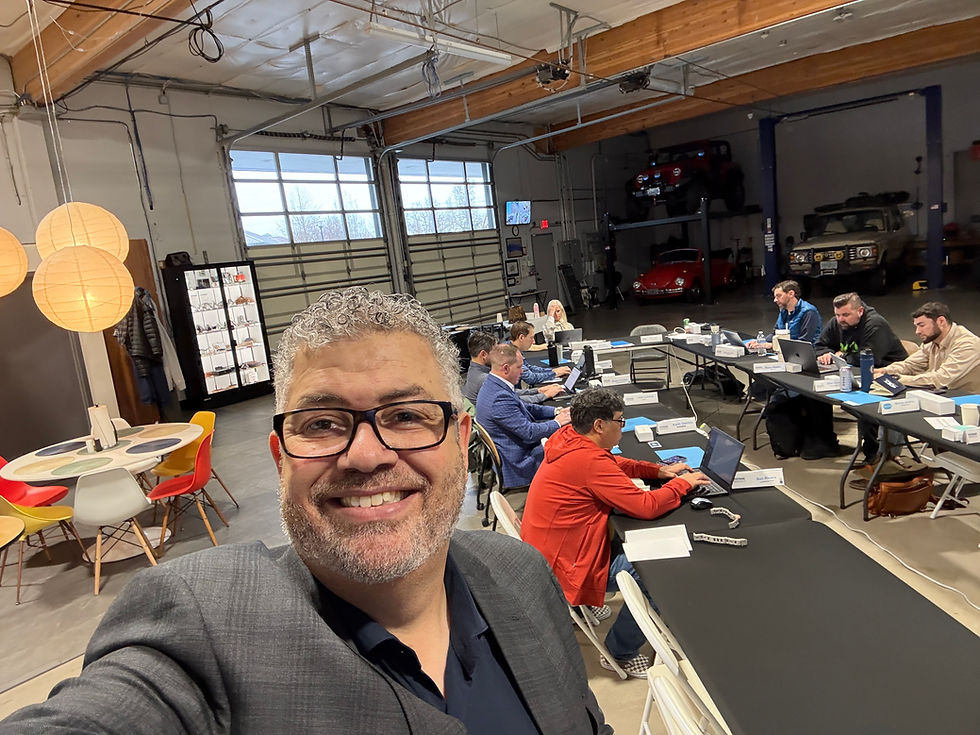
In every industry, leaders face the same reality: AI isn't optional anymore—it's essential. But here's the hard truth: without alignment, ownership, and clear strategy, AI remains just another tool sitting on the shelf. A recent workshop in Vancouver, Oregon, reinforced this conviction with powerful clarity. AI must serve the business's unique value if it's going to drive measurable results.
The event scored near-perfect ratings:
Content: 4.75
Deliverability: 4.75
Applicability: 4.88
Would Recommend: 100%
Participants left energized, challenged, and clearer about transforming AI from hype into impact. One attendee captured the room's sentiment: "100% relevant and amazing."
The Pulse of the Room: What Stood Out Most
The Vancouver group reflected enthusiasm, constructive critique, and fresh insight. Leaders highlighted both workshop strengths and deeper organizational needs:
"Great content and exceptional delivery."
"Great learning about how AI agents can be used to improve your business on every level."
"Great speaker, complete take-home actions, connected."
"Workshop is loaded with value and I highly recommend this approach!"
Others pointed out opportunities for improvement, revealing deeper challenges in organizational AI adoption:
"I felt like it was about using specific software... maybe we could have framed the meeting differently and titled it around how to use existing systems to gain leverage over competitors."
"Slower speech cadence."
And one particularly thoughtful reflection: "For me, the biggest value was seeing a high-level overview of how agent-to-agent workflows work using different AI systems. It really opened my mind to the current capabilities of AI tools."
This feedback reveals two key points: participants prioritize structural clarity and practical application above all else. They want tools and frameworks that show what's possible and how to tailor AI to their reality.
Survey Insights: Where Companies Stand Today
Survey responses provided an honest look at organizational readiness.
Ownership When asked who was responsible for AI and automation outcomes, most said: No clear owner. Without accountability, AI projects remain scattered and fail to gain traction.
Agility When performance drops 15%, most reported they could respond within a week. That's promising agility—but only if systems support quick pivots.
Data Readiness Most admitted they only had scattered or siloed exports. Few had clean, structured data sets. Without accessible, organized data, even the best AI strategy stumbles.
Governance and Safety Many confessed, "We have no protections in place yet." This leaves organizations vulnerable to compliance risks and erodes internal trust.
KPIs The most common answer: "We don't have any KPIs tied to AI yet." This makes measuring ROI or justifying investment nearly impossible.
Desired Outcomes The #1 outcome leaders wanted from AI was customer experience. This reflects healthy recognition that AI isn't just about cost-cutting—it's about building stronger, smarter relationships with customers.
Biggest Blockers The dominant challenge? Talent and skills. Organizations want to adopt AI but lack internal expertise to execute effectively.
The Learning Moment: Turning Barriers Into Breakthroughs
What made this workshop stand out wasn't just the technology—it was the structural clarity it brought to gaps that must be addressed for AI to succeed. The Vancouver group walked away understanding that:
AI adoption fails without clear ownership. Someone must be accountable.
Data doesn't need to be perfect, but it must be accessible and structured.
Safety rules—no matter how simple—are essential for trust and compliance.
Every AI initiative needs a KPI tied to it, or it's just activity without impact.
The skills gap is solvable. With training and pilots, organizations can quickly upskill.
As one attendee reflected: "It really opened my mind to the current capabilities of AI tools." That shift—from skepticism to belief, from curiosity to confidence—is the first step toward meaningful transformation.
Where Will You Focus First?
The Vancouver session made one truth undeniable: leaders are ready for AI, but readiness isn't the same as results. The key is alignment. AI must be tied to strategy, measured against KPIs, and designed to elevate customer experience.
Ask yourself: If customer experience is your top priority, what's the one process you could improve in the next 30 days with AI? And who on your team will be responsible for making it happen?
Where GPS Summit Creates Internal AI Leaders
This workshop revealed something critical: leaders don't just want AI exposure. They want internal capability. They want the skills gap solved with precision and discipline.
That's what GPS Summit delivers.
GPS Summit transforms high-potential employees into AI Systems Generalists in three days—faster than MIT's 8-week program, more practical than Stanford's $18K certificate, designed for companies that need internal capability, not consultant dependence.
Your designated leader learns to identify bottlenecks, build solutions, and drive measurable efficiency gains within a 90-day roadmap. Applied learning that creates force multipliers.
The result: internal leaders who turn scattered AI experiments into repeatable competitive advantage.
Ready to solve your skills gap?Enroll your high-potential employee in GPS Summit
Next Steps
The companies that define ownership, fix data gaps, and build internal confidence are the ones that will leverage AI for measurable customer experience improvements while competitors remain stuck with tools they can't execute.


Comments