
AI Agents Are Not the Future. They Are Available Right Now.

Updated: May 4

The Technology That Closes the Gap Between You and Your Competition
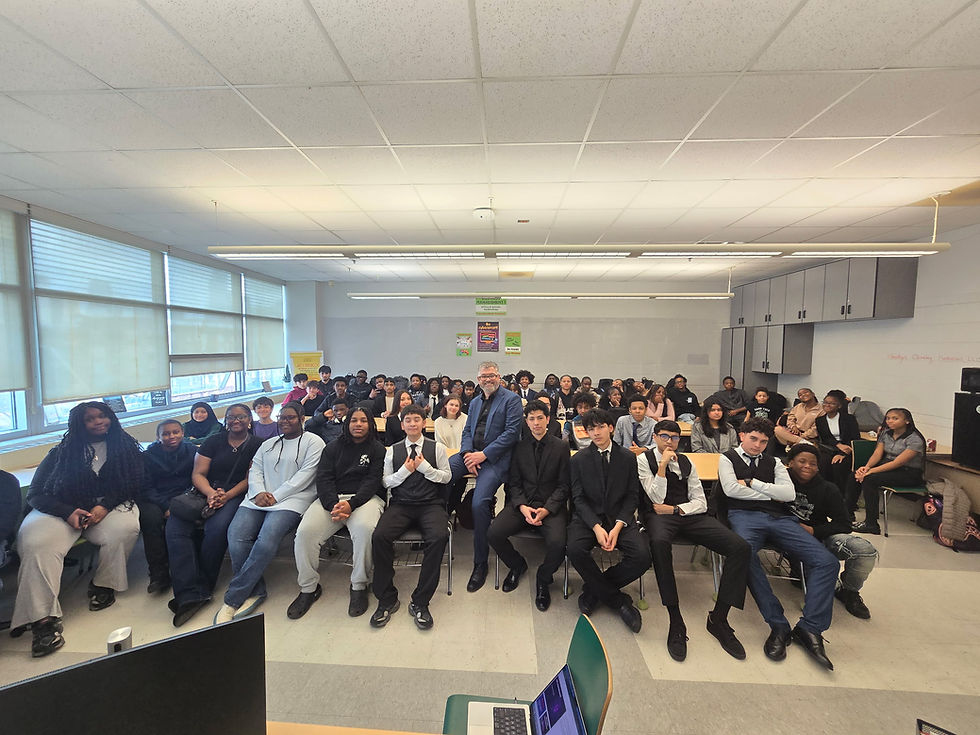
Business leaders who have been watching the Artificial Intelligence space for the past few years have become accustomed to a certain kind of promise: powerful capability that is always just around the corner, always requiring more technical infrastructure than most companies have, always most accessible to enterprises with dedicated AI teams and specialized resources. That framing is outdated. And nowhere was it more directly challenged than in a CEO advisory group session in Nolensville, Tennessee on April 21, 2026 — where a room of thirteen business leaders from physical security, construction, life sciences, fintech, transportation, logistics, and manufacturing came face to face with AI agent technology and realized, some of them for the first time, that they could deploy it themselves.
The session earned a 4.33 out of 5 for Quality of Content, a 4.67 out of 5 for Delivery, a 4.33 out of 5 for Applicability, and a 100 percent recommendation rate. But the feedback that captures what actually happened in that room came from an attendee who was still processing the implications when they wrote their review:
"I left energized about AI with a desire to learn more about AI agents and figure out how to put them to work for me." — Nolensville Workshop Attendee, April 21, 2026
This is the response that matters. Not energized about AI in the abstract — energized about AI agents specifically. With a desire not just to learn but to deploy. To put them to work. That shift, from passive interest to active intent, is what separates the leaders who eventually build real AI capability from the leaders who stay in the exploration phase indefinitely. And it is the shift that the GPS Summit is designed to produce at a sustained, organizational scale.
What 13 Tennessee Leaders Revealed About AI Readiness in the South
The Nolensville session drew thirteen leaders from industries spanning physical security, civil and commercial construction, life science equipment manufacturing, fintech, special needs ground transportation, logistics, seating manufacturing, home furnishings, electric supply distribution, professional coaching, and roofing. A wide industry spread, a mix of company sizes from under 50 to over 1,000 employees, and a confidence profile that was sharply bimodal — eight respondents at an 8 or higher, three at a 4 or lower. This kind of spread within a single group is one of the clearest indicators that AI readiness in the mid-market is not uniformly advancing — it is diverging. The companies that are moving are moving. The ones that are not are falling further behind relative to the ones that are.
Here is what the survey data showed about where the Nolensville group currently stands:
92% had no formal KPI accountability for AI outcomes. 77 percent had no KPIs at all, and another 15 percent were tracking results occasionally without a named owner. Only one company in the room had a functioning AI accountability structure with a KPI, an owner, and a regular review cadence — and that company was also the furthest ahead on governance, data readiness, and pilot deployment.
54% had no single accountable owner for AI outcomes. Seven of thirteen respondents had no clear owner — either explicitly unassigned or distributed across a working group with no individual accountability. For a group where 100 percent recommended the session, this structural gap is the defining distance between the energy generated in the room and the outcomes that energy could produce.
69% had no effective AI safety governance. 62 percent had zero protections in place, and another 8 percent relied on informal habits only. In a room that included a FinTech company navigating financial regulation, a special needs transportation company with HIPAA-adjacent data obligations, and a physical security services company protecting sensitive client information, this governance gap represents real organizational risk.
62% named talent and skills gaps as their biggest blocker. The answer that has now dominated the GPS Summit series from Nebraska to British Columbia continued to lead in Nolensville by a wide margin. The tools are available. The use cases are clear. The people equipped to own and deploy them consistently are not yet in place across most mid-market organizations.
38% named cost reduction as their primary AI goal. This was the dominant outcome goal for the Nolensville group, followed by talent development at 23 percent and revenue growth at 23 percent. For industries like construction, transportation, logistics, and manufacturing — all well represented in the room — the cost reduction case for AI is both compelling and immediate: automating documentation, streamlining procurement, optimizing routing and scheduling, and reducing the operational overhead that consumes margin in competitive, low-differentiation sectors.
What AI Agents Actually Are — and Why They Change Everything
The most significant theme to emerge from the Nolensville session was not a data point — it was a technology concept. AI agents. The idea that artificial intelligence can be configured to operate autonomously — executing multi-step tasks, making decisions within defined parameters, completing workflows from start to finish without continuous human intervention — captured the imagination of multiple leaders in the room in a way that high-level AI overviews simply do not.
"It was excellent. The presentation used real tools and showed how we could use AI Agent technology ourselves without having to have consultants." — Nolensville Workshop Attendee, April 21, 2026
This comment identifies exactly what makes the GPS Summit approach distinctive in a market full of AI presentations: the demonstration of real tools, deployed in real workflows, by a real person without a team of consultants behind them. This matters enormously to the kinds of leaders in the Nolensville room — business owners and senior operators who are not managing large technical staffs and cannot afford to be dependent on external consultants for every AI deployment. When they see someone build and deploy an AI agent in real time, the barrier of perceived complexity collapses. The response changes from this requires expertise I do not have to this is something I can actually do.
What an AI Agent Can Actually Do for Your Business
For leaders across the industries represented in Nolensville, the practical applications of AI agents are both immediate and significant. Consider what autonomous AI agents can deliver in the specific contexts these companies operate in:
Physical security companies can deploy agents that handle initial client inquiry qualification, incident report documentation, shift scheduling optimization, and compliance report generation — freeing operations staff for the complex, judgment-intensive work that actually requires human oversight.
Construction and civil contractors can use agents to automate subcontractor communication, change order processing, safety documentation, project status reporting, and regulatory filing — addressing the documentation burden that consistently consumes project manager capacity and increases labor cost per project.
Transportation and logistics companies can deploy agents that optimize routing in real time, manage driver communication, handle customer notification workflows, and process compliance documentation — producing the cost reduction outcomes that 38 percent of the Nolensville group named as their primary AI goal.
Distribution and supply companies can use agents to automate procurement communication, manage inventory alerts, handle customer order updates, and generate Customer Insights from purchase pattern data — improving Customer Engagement while reducing the manual overhead that erodes margin in competitive distribution markets.
In every one of these cases, the agent is not replacing a human. It is handling the work that was either not getting done at all because there was no capacity for it, or getting done poorly because it was the last priority of an overextended team member. The Customer Experience improvement that results is not theoretical — it is the natural consequence of a company that now delivers consistent, timely, accurate communication and service across every touchpoint, because an agent is handling the consistency while the humans focus on the complexity.
The Live Build Request and What It Reveals
"I would like to see an AI agent being built as part of the presentation as I think that would really bring things home for me." — Jeff B., Automation NTH
Jeff's feedback from Automation NTH — a life science OEM with three or more pilots already in production — is some of the most actionable and revealing in the Nolensville data. He is not asking for more conceptual content. He is asking for a live demonstration of AI agent construction so he can see the actual build process and understand how it maps to his own business context. This is the feedback of a leader who is already past the awareness stage and is specifically seeking the hands-on, build-as-you-watch instruction that would accelerate his ability to deploy.
This is precisely the experience the GPS Summit delivers — not a polished presentation about what AI agents can do, but a structured development program that teaches participants how to build them, configure them, govern them, and connect them to the specific business outcomes the company is pursuing. The difference between watching someone build an agent and building one yourself, with the guidance, the feedback, and the accountability structure of a peer cohort and an experienced facilitator, is the difference between inspiration and capability. The GPS Summit is designed to produce capability.
The Private LLM Question and What It Means for Regulated Industries
One of the most practically significant questions to emerge from the Nolensville session came from Chantele Allen-Jacobs of Earth Solutions, a civil construction company: how to obtain a private large language model. This question sits at the intersection of AI capability and data governance — and it is one of the most important questions for any company operating in a context where sensitive project data, client information, regulatory filings, or competitive intelligence cannot safely be processed through publicly accessible AI tools.
The answer to the private LLM question exists, and it is more accessible than most business leaders realize. Hosted, private deployments of leading language models are available through major cloud providers in configurations that ensure company data stays within the company's controlled environment, never contributes to model training, and is subject to full audit and access control. For the FinTech company navigating financial regulation, the transportation company with sensitive passenger data, the physical security company protecting client facility information, and the construction company managing proprietary project specifications — the private LLM path is not a future option. It is an available architecture that a properly developed internal AI leader can implement today.
Building this capability — understanding the AI infrastructure options, selecting the right deployment model for a specific regulatory and data context, and implementing the governance framework that makes the deployment both safe and auditable — is one of the advanced competencies that GPS Summit participants develop. It is what separates AI Leadership from AI enthusiasm: the ability to navigate the real-world constraints of a specific business and still find the path forward.
The One Company That Already Has the Model Everyone Else Needs
Baker Roofing of Nashville, represented by Tara Connolly, brought one of the most advanced AI readiness profiles in the Nolensville room. A company of over 1,000 employees with a clean, labeled dataset with proper access controls, a best-practice safety framework with sensitive data blocked from AI tools and activity logged and reviewed, three or more pilots in production, and an 8 out of 10 confidence score. Every other company in that room is looking at Baker Roofing's AI infrastructure posture as a destination — and Tara Connolly, a functional leader operating as the AI driver for a large construction company, is the kind of internal champion that makes it possible.
Baker Roofing's AI readiness did not come from exceptional resources or a unique industry position. It came from organizational decisions: the decision to name a responsible owner, to build governance before scaling adoption, to invest in clean data infrastructure, and to connect AI deployments to measurable outcomes. Every company in the Nolensville room can make those same decisions. What they need is the framework to make them well — and a developed leader who knows how to execute against them. Digital Transformation of this quality is built from the inside, by people like Tara, who understand both the business and the technology well enough to connect them.
The GPS Summit: Where AI Agent Ambition Becomes Organizational Capability
The energy in the Nolensville room after the session reflected something that the GPS Summit series sees consistently in its best sessions: leaders whose imagination about what is possible has been genuinely expanded, who are ready to move, and who are now sitting at the exact point where the right development program can convert that energy into permanent organizational capability.
That conversion is the work of the GPS Summit. It takes the leader who left Nolensville energized about AI agents and wanting to put them to work — or the leader who wants to see an agent built live — or the leader who is asking about private LLMs for their regulated environment — and gives them the structured development experience to actually build it. Not eventually. With a strategy, a timeline, a peer accountability structure, and a clear mandate to deliver results.
GPS Summit participants leave equipped to:
Build and deploy AI agents without consultants — developing the hands-on capability to configure autonomous AI systems for specific business workflows, using real tools that the leader can maintain and iterate on independently.
Implement private LLM architectures for regulated environments — selecting and deploying the right AI infrastructure for industries where data sensitivity, regulatory compliance, and auditability are non-negotiable requirements.
Build a complete AI Strategy with KPI accountability — closing the gap between the 92 percent of Nolensville companies with no formal AI measurement and the structured, accountable AI program that Baker Roofing has already built.
Apply AI to cost reduction, talent development, and revenue growth — connecting AI Agent deployments directly to the three primary outcome goals the Nolensville group named, with measurable results tied to each one.
Own the AI agenda with organizational authority — developing the AI Leadership credibility and strategic communication skills to secure buy-in, govern AI usage safely, and drive adoption across a team that may have varying levels of AI readiness.
To learn more about the GPS Summit and how it develops internal AI leaders who can build without consultants, visit the GPS Summit overview page or review the full competitive comparison.
The Desire to Learn More Is the Most Important Signal of All
When a business leader says they left a session with a desire to learn more about AI agents and figure out how to put them to work — they are not describing passive curiosity. They are describing a decision in formation. A mental model that has shifted from watching AI to wanting to build with it. From understanding the concept to pursuing the capability. That is not a small move. In a market full of leaders who have been observing AI for years without acting, the emergence of genuine, specific, deployment-oriented desire is the leading indicator of Competitive Advantage being built.
The Nolensville session also produced something rarer: an honest piece of critical feedback from a leader who left energized despite noting that some parts of the presentation felt pre-packaged. That combination — leaving with energy and desire even when the delivery was not perfect — is its own kind of endorsement. It means the content was powerful enough to produce the right result regardless of presentation format. And it means the leaders in that room are not looking for polished entertainment. They are looking for what works. For real tools. For the path from where they are to where they want to be.
The AI in Marketing, Customer Insights, Customer Experience, and operational capability that most Nolensville companies are not yet generating are available to them — not through a consulting engagement or a technology vendor, but through the development of an internal leader who can build it themselves. That is the GPS Summit's core promise. And for a room that was 100 percent willing to recommend the session that made them want it, the next step is clear.
When you are ready to give your most capable leader the foundation to build AI agents, implement AI Strategy, and drive the Business Growth outcomes your company is after — without relying on consultants — enroll them in the GPS Summit here. To learn more about BREATHE! Experience and the full program, visit breatheexp.com.
What would it mean for your company's competitive position if the right person on your team could build and deploy AI agents independently — without consultants, without waiting, starting this quarter?


Comments