
AI Is Not About Replacing People. It Is About Freeing Them.

Updated: May 4

The AI Conversation That Actually Needs to Happen
There is a version of the Artificial Intelligence conversation that has done real damage to adoption across the business community. It is the version built on urgency through fear — the blanket proclamation that companies that do not adapt will not survive, that AI will replace entire workforces, that the leaders who hesitate are already falling behind. This framing is not entirely wrong in its assessment of the stakes. But it is wrong in its method. And when it lands in a room full of business leaders who have built their companies on the strength of the people who work for them, it does not produce urgency. It produces resistance. And that resistance is a legitimate, thoughtful response — not a failure of imagination.
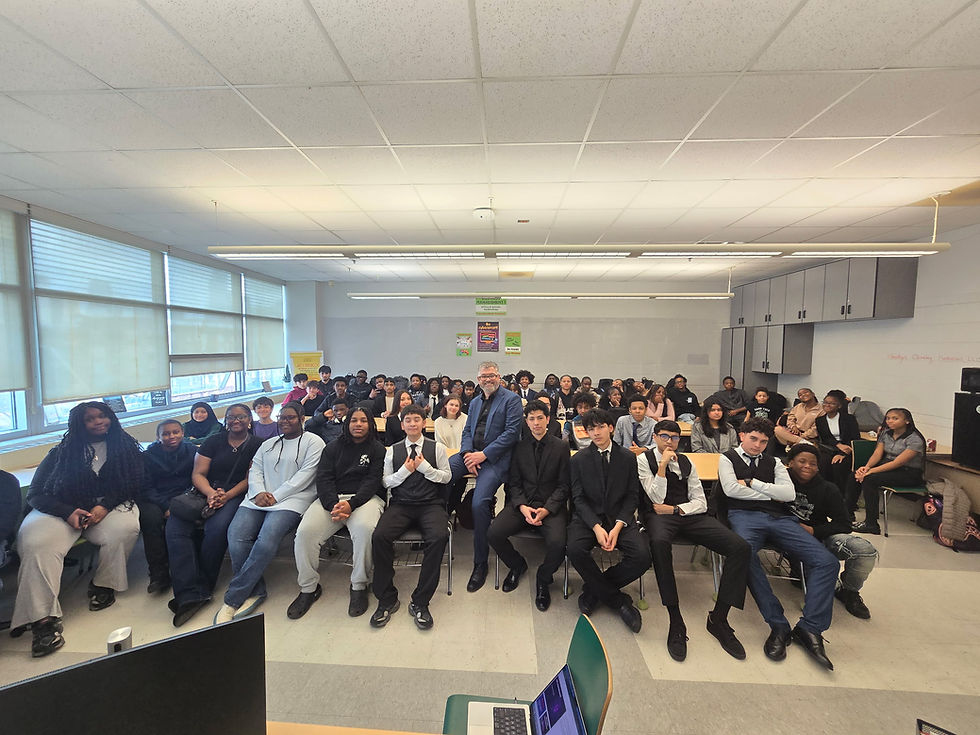
On April 8, 2026, a CEO advisory group gathered in Atlanta, Georgia for a GPS Summit workshop, and one of the most important moments of the session came not from the content presented but from the feedback written down afterward. One attendee expressed something that many business leaders feel but rarely say out loud: the acknowledgment that AI matters, the frustration with fear-based framing, and the clear conviction that for their specific business, in their specific context, AI is a tool for improving operations — not a mechanism for reducing headcount. That is not a resistance to AI. That is an accurate, sophisticated understanding of what AI should be used for. And it deserves to be the center of the conversation.
The session earned a 4.0 out of 5 for Quality of Content, a 4.5 out of 5 for Quality of Delivery, a 4.0 out of 5 for Applicability, and a 100 percent recommendation rate. Those scores, alongside the survey data from the six Atlanta leaders in the room, tell a story about a market that is ready to engage with AI on its own terms — not on the terms of hype cycles or vendor pitches — and that has every reason to build real AI capability when the framing is right.
What Six Atlanta Leaders Revealed About AI on Their Terms
The Atlanta session brought together leaders from commercial real estate, transit and transportation consulting, management consulting, healthcare and professional services, marketing and communications, and coaching. All six companies were in the 1 to 50 employee range — small businesses where every person on the team carries significant weight and where the decision to deploy any new capability is personal, considered, and deeply connected to the culture the leader has built. For groups like this one, the AI conversation requires a different kind of honesty than it does in a room full of large enterprise operators. It requires acknowledgment that the stakes are different, the constraints are different, and the right AI strategy looks different depending on the specific nature of the business and the people who make it run.
"AI is here and I acknowledge its importance. However, I do not like blanket statements about how if you do not adapt you die. My business is different than most, and yes AI can help me improve some monotonous day-to-day tasks. However, as far as replacing people, that is not something I am willing to do." — Atlanta Workshop Attendee, April 8, 2026
This comment should be read not as pushback against AI but as a precise definition of what the right AI strategy looks like for a people-first small business. Improving the monotonous. Freeing capacity. Letting the team focus on the work that requires human judgment, relationship, and creativity. That is not a reluctant concession to AI. That is an expert articulation of where AI delivers the highest value — and it is exactly the philosophy that the GPS Summit builds AI strategy around. AI does not replace good people. It protects them from bad work. And when it is deployed correctly, it enables them to do more of the work that makes your business worth building.
The survey data from the Atlanta group reflects a slightly more advanced AI readiness posture than some previous GPS Summit sessions — with half the group having one to two pilots completed and one company already at three or more. But the readiness gaps that have appeared in every city along the series were still clearly present:
67% had no KPIs tied to AI outcomes. Nearly two thirds of the group — despite having some pilot activity — had no formal accountability structure measuring whether those pilots were actually delivering results. Occasional tracking without ownership is not accountability. It is observation.
83% had no effective AI safety governance. 67 percent had zero AI protections in place, and an additional 17 percent were relying on informal habits with no consistent enforcement. In a room that included healthcare, financial services, and marketing communications professionals, this exposure is significant.
83% named talent and skills gaps as their biggest AI blocker. Five of six respondents — across industries, company sizes, and AI maturity levels — all arrived at the same answer. The technology is not what is missing. The skilled, empowered, accountable people to deploy it are.
33% had paused or never started AI pilots. One company had completed pilots but paused them entirely — a pattern that often signals promising early experimentation that ran out of organizational momentum before reaching production.
AI confidence averaged 6.7 out of 10, ranging from 4 to 10. The leader at a 10 had a functioning working group, one to two pilots in production, and the clearest sense of direction. The leader at a 4 had paused pilots and no KPI structure. The distance between them was almost entirely a function of organizational infrastructure, not industry or intent.
The Right AI Strategy Starts With Your Business, Not With the Tool
The most valuable insight that the Atlanta session produced — and the one that should inform how every small business leader approaches their AI Strategy — is this: AI is not a single thing that either fits your business or does not. It is a set of capabilities that can be selectively and intentionally deployed to serve the specific goals of a specific company with a specific culture, a specific team, and a specific vision for what Business Growth looks like.
For the attendee who pushed back on the replace-people narrative, this distinction matters enormously. Their business runs on human relationships, expert judgment, and the kind of trust that is built over time between people — not between a person and an algorithm. AI deployed in that context should amplify the human capability at the center of the business model, not compete with it. And when it is deployed that way, the results are not just acceptable — they are often transformative.
What Right-Sizing AI Actually Looks Like
"Fantastic presentation — eager to right-size AI automation into business infrastructure." — Sheronica B., The Barcliff Group Inc.
Sheronica's use of the phrase right-size is precise and important. It reflects a mature understanding that AI adoption is not a binary — you are either all in or you are behind. It is a calibration. A deliberate, strategic decision about where in your business AI will create value, how much of it to deploy at once, and how to integrate it with the people, processes, and culture that are already working. Right-sizing AI means starting where the return is highest and the disruption is lowest. It means building confidence through early wins and using that confidence to fund the next layer of adoption. It means deploying AI as a Business Growth engine rather than a cost-cutting mandate.
For a healthcare and professional services company like The Barcliff Group, right-sizing might mean deploying AI to streamline intake workflows, automate scheduling and follow-up communications, generate first drafts of client-facing documentation, and surface Customer Insights from service data that previously required hours of manual analysis. None of these applications replace the clinical or professional judgment at the center of the business. All of them free the people delivering that judgment to spend more time on the work that actually requires them.
This is the AI in Marketing, Customer Experience, and Customer Engagement conversation that gets lost when the framing stays at the level of broad industry transformation. The practical, company-specific, people-protecting version of AI strategy is the one that produces the most durable results — and the most enthusiastic adoption from teams who see AI as a tool that supports their work rather than threatens it.
Why Paused Pilots Are a Warning Sign Worth Taking Seriously
One of the Atlanta companies had run AI pilots and then paused them entirely. This is one of the more instructive patterns in the GPS Summit series data — not because pausing is inherently wrong, but because of what it usually signals. Pilots get paused when they run out of organizational energy. When the person who championed them moved on to other priorities. When the results were inconclusive and no one had the structure to interpret what that meant or the mandate to iterate. When AI is treated as a project rather than a permanent function, the project eventually loses its sponsor and stalls.
The antidote to paused pilots is not a better pilot. It is a better organizational structure — one with a named AI leader who owns the agenda continuously, a KPI framework that makes results visible and iterable, and the institutional commitment to treat AI capability as a function of the business with the same permanence as sales, operations, or finance. When that structure is in place, pilots do not stall. They inform. They iterate. They compound into competitive advantage that compounds further over time.
The Revenue and Cost Goals That AI Is Built to Deliver
The Atlanta group split evenly between revenue growth and cost reduction as their primary AI goals — three respondents each. This is a telling distribution. Revenue growth and cost reduction are not competing objectives in an AI strategy. They are two outputs of the same underlying capability: operational efficiency. When AI reduces the time required to complete administrative, analytical, and communication tasks, the savings flow in both directions simultaneously. The team's capacity is freed for revenue-generating activity. The cost per unit of output decreases. Customer Insights become faster and more precise. Digital Transformation produces both a leaner operation and a more capable one.
For small businesses in the 1 to 50 employee range — where every hour of every team member's time is consequential — this dual return is particularly powerful. The right AI deployment does not ask the team to do more. It asks them to do differently: to offload the work that AI can handle and redirect their attention to the work that makes the business worth choosing over every other option in the market.
The GPS Summit: AI Strategy Built Around Your Business
The Atlanta session's feedback — both the scores and the written comments — points to something important about what leaders actually need from an AI program. They do not need more evidence that AI is important. They already know it. They do not need blanket prescriptions that assume every business has the same goals, the same constraints, or the same culture. They need a framework and a capable person who can apply it specifically to their business, their team, and their version of what success looks like.
That is exactly what the GPS Summit delivers. Not a one-size-fits-all AI curriculum, but a leadership development experience that equips your highest-potential internal leader to build an AI strategy that fits your business — right-sized, people-protective, and oriented toward the specific growth and efficiency goals that matter most to you.
Here is what GPS Summit participants are equipped to build:
A right-sized AI Strategy that starts with your company's specific goals, constraints, and culture — and identifies exactly where AI will create the most value without disrupting what is already working.
AI governance that protects people and data — establishing the usage policies, data access controls, and output review standards that make AI safe to deploy in environments where trust and confidentiality are foundational to the business.
KPI structures that make AI accountable — closing the gap between pilots that stall and investments that compound, by creating the measurement infrastructure that keeps AI performance visible and improvable.
Applied AI in customer-facing workflows — including Customer Experience design, Customer Engagement automation, AI in Marketing execution, and Customer Insights generation that improve decision quality and drive revenue without replacing the human relationships at the core of the business.
The capability to drive AI Leadership buy-in from the inside — presenting AI initiatives in the language of business outcomes that moves teams, partners, and stakeholders from skepticism to engagement.
To learn more about the GPS Summit program and how it is built to serve businesses of every size and industry, visit the GPS Summit overview page or review the full competitive comparison.
Your Business Is Different. Your AI Strategy Should Be Too.
The leader who wrote that their business is different than most, that they acknowledge AI's importance and want to use it to improve what is monotonous rather than reduce what is human — that leader is not behind the curve. That leader is ahead of it. Because they have already done the most important work: they have defined what AI should be in their business on their own terms, for their own reasons, in service of the values they have built their company around.
What they need now is not more convincing. It is a clear path. A capable person inside the organization who can take that principled vision and translate it into a working AI infrastructure — the right tools deployed in the right workflows, governed by the right policies, measured by the right KPIs, and owned by someone accountable for making it better every quarter. That is the Competitive Advantage that the GPS Summit builds. Not the loudest AI presence in the market, but the most intentional one. The kind that fits the business, serves the people, and compounds over time in ways that competitors who are chasing hype instead of strategy will never replicate.
Atlanta showed up to this session with honesty. With self-awareness. With a clear-eyed view of both the opportunity and the constraints. That combination is the most powerful foundation any business can bring to an AI strategy conversation — and it is exactly the foundation that the GPS Summit is designed to build on.
When you are ready to enroll your high-potential leader and give them the tools to build an AI strategy that fits your business, enroll them in the GPS Summit here. To learn more about BREATHE! Experience and the full GPS Summit program, visit breatheexp.com.
What would it look like in your business if AI handled every task your best people should not have to do — and freed them entirely for the work only they can do?


Comments